Retaining Wall Contractor in Raytown, MO
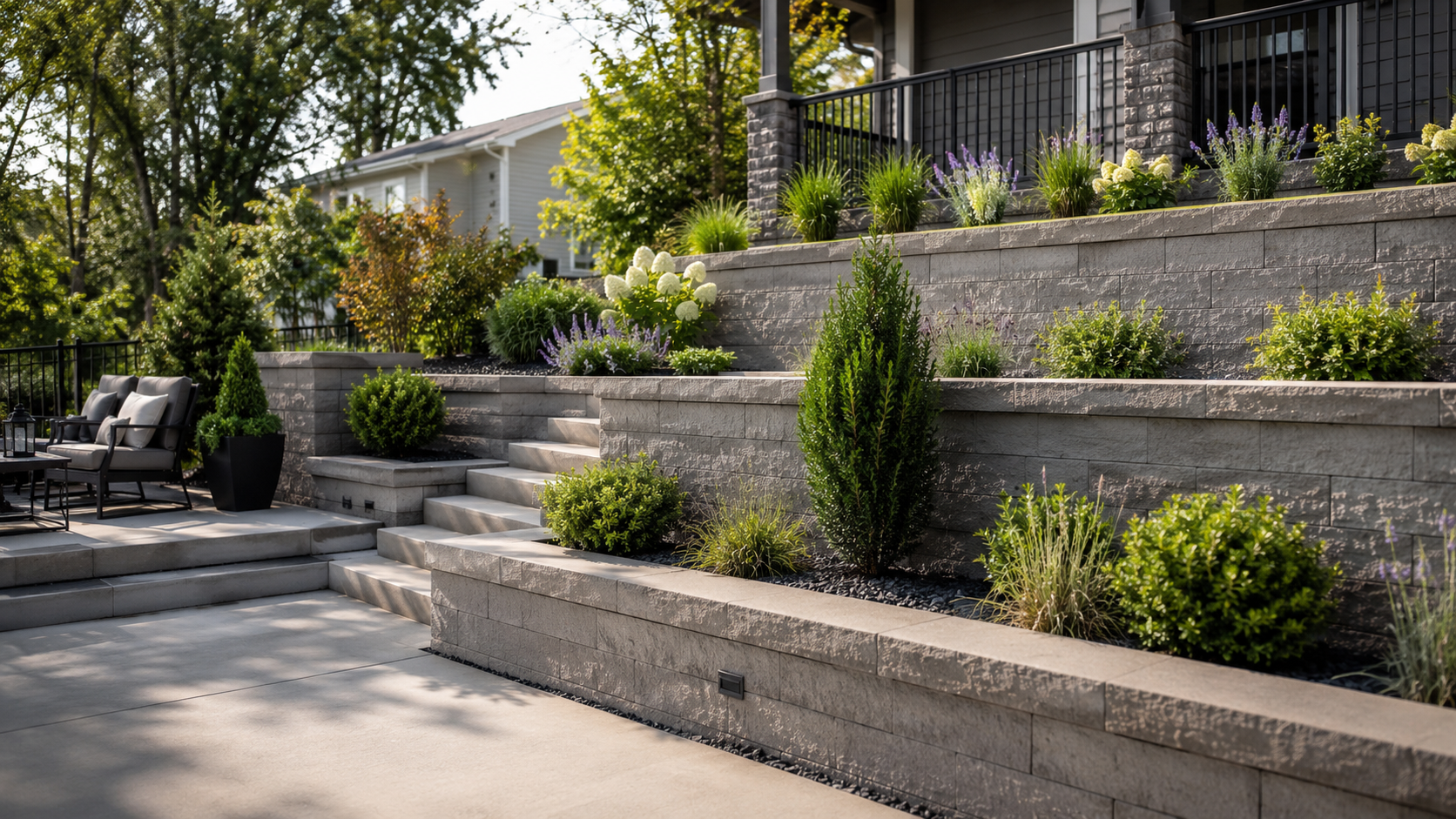
Concrete retaining walls for sloped lots, grade changes, and landscape structure in Raytown and the southeast Kansas City metro. We build walls that hold grade reliably, drain correctly behind the wall, and anchor patios, planting areas, and landscaping against KC's clay soil movement.
The Result
Usable Yard Space Where Slope Was the Problem
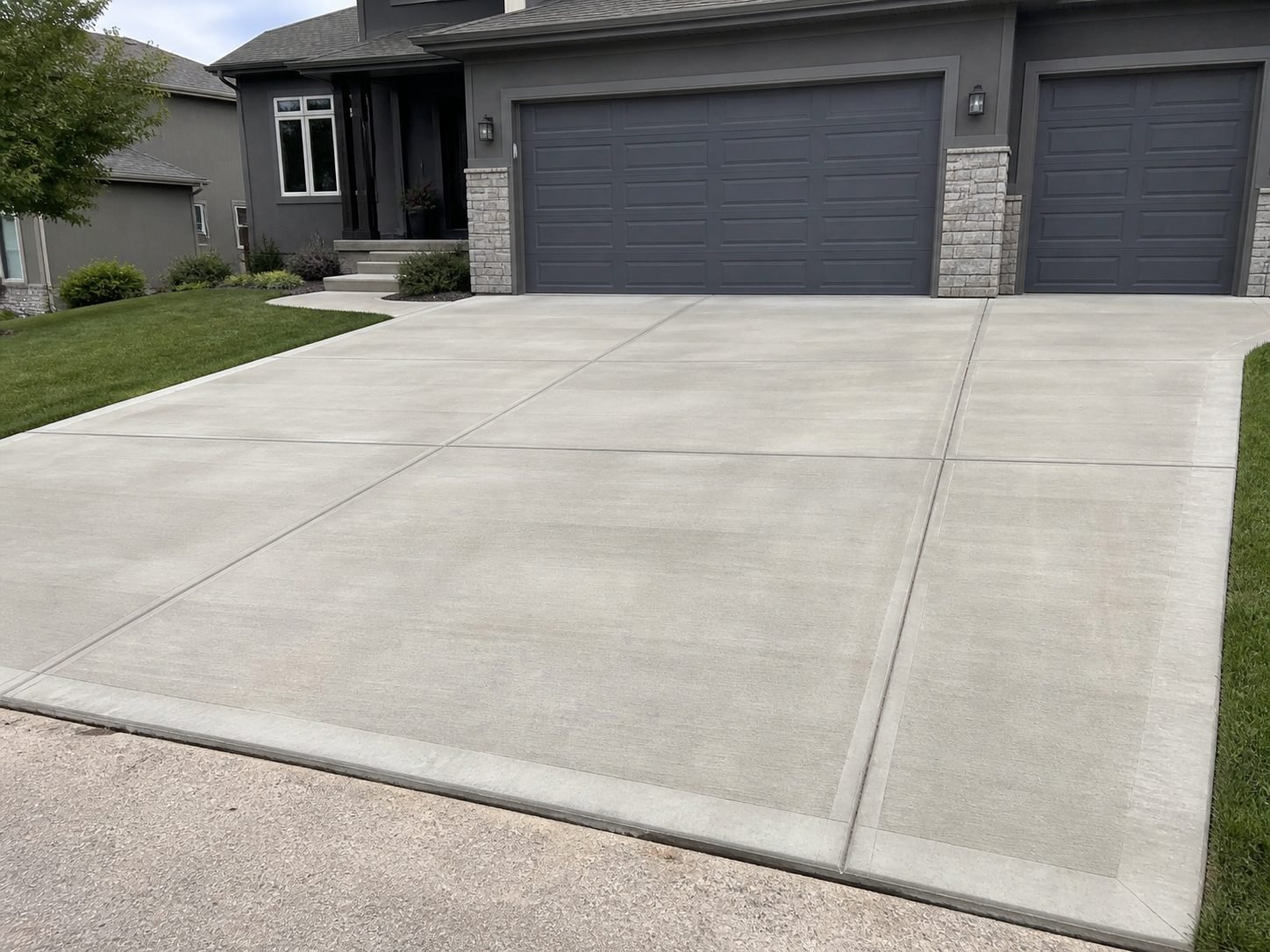
A retaining wall converts a sloped, hard-to-use portion of a yard into level ground for a patio, planting area, or lawn. It also stops erosion and defines grades between different areas of the property. Done correctly with drainage behind the wall, a concrete retaining wall handles Kansas City's clay soil pressure and freeze-thaw cycling for decades.
Overview
What Retaining Wall Work Covers
Projects range from small garden-height walls (12–18 inches) defining planting areas to taller structural walls (3–4+ feet) holding significant grade changes. Walls are often integrated with adjacent patio projects. Drainage behind the wall — gravel backfill and weep holes or drainage pipe — is a required part of every installation.
Common Reasons
Sloped Lot Grade Change
Creating a level terrace on a sloped lot — for a patio, usable lawn area, or play area — requires retaining the grade difference.
Erosion Control
Slopes losing soil to water runoff or that have become unstable need a wall to stabilize the grade.
Patio Tie-In
Patios at different elevations than the surrounding yard typically need a retaining wall along one or more edges to hold the grade transition.
Landscape Definition
Lower walls (12–18 inches) that define planting beds, separate lawn from hardscape, or create visual structure in a flat yard.
Drainage Management
Redirecting surface and subsurface water with a combination of grading and wall construction to prevent water from pooling toward the foundation.
Technical Standards
What Matters on Retaining Walls Projects
Drainage Behind the Wall
The most common cause of retaining wall failure is hydrostatic pressure from water trapped in soil behind the wall. Gravel backfill and weep holes or drainage pipe prevent this.
Footing Depth for KC Frost
Footings need to extend below the frost line (24–28 inches in KC) to prevent frost heave from lifting the wall base in winter.
Wall Batter and Tie-Back Design
Walls over 3–4 feet often need to be angled back (battered) or include tie-back anchors to resist soil pressure behind them.
Clay Soil Pressure Loads
KC's expansive clay exerts significant lateral pressure on retaining structures — more than sandy or silty soils. Wall design accounts for the local soil type.
Permits for Taller Walls
Most municipalities require permits for walls over 4 feet, sometimes with engineering drawings. We'll flag permit requirements during the estimate.
Raytown & Southeast KC
Local Conditions That Affect This Work
KC's clay soil puts more lateral pressure on retaining walls than most soil types — it's heavier when saturated and expands against the wall face when moisture levels change. Drainage behind the wall isn't optional here — it's what separates a wall that lasts 30 years from one that tilts forward in 5.
How It Works
From First Call to Final Walkthrough
Request Your Estimate
Call or submit the form. We'll schedule a site visit at your property — no phone quotes for work we haven't seen.
Site Review and Quote
We assess scope, site conditions, and measurements in person, then provide a written quote.
Prep, Form, and Pour
We handle demo if needed, subgrade preparation, forming, and the pour on an agreed schedule.
Finish and Walkthrough
We finish to spec, apply curing compound, and walk you through care and timeline before leaving the site.
Common Questions
Retaining Walls FAQ
How tall can a concrete retaining wall be?
Why do retaining walls fail?
Can a retaining wall be integrated with a patio project?
Do I need a permit for a retaining wall?
What's the difference between a poured concrete wall and a block wall?
More questions? Call us directly.
(816) 542-6124Related Services
Concrete Patios
Patios and outdoor living concrete for backyards, grilling areas, seating spaces, and cleaner outdoor flow.
Learn moreStamped & Decorative Concrete
Stamped, stained, colored, and decorative concrete for patios, entries, pool decks, and outdoor feature areas.
Learn moreFoundations & Sitework
Foundations, slabs, preparation, and sitework for residential additions and commercial scopes.
Learn moreCoverage
Retaining Walls Throughout the Southeast KC Metro
Raytown • Kansas City • Grandview • Independence • Lee's Summit • Blue Springs
Request a Free Site Walk for Retaining Walls
We serve Raytown and the southeast Kansas City metro. Call (816) 542-6124 or submit the form — we'll schedule a site visit and follow up with a written quote.