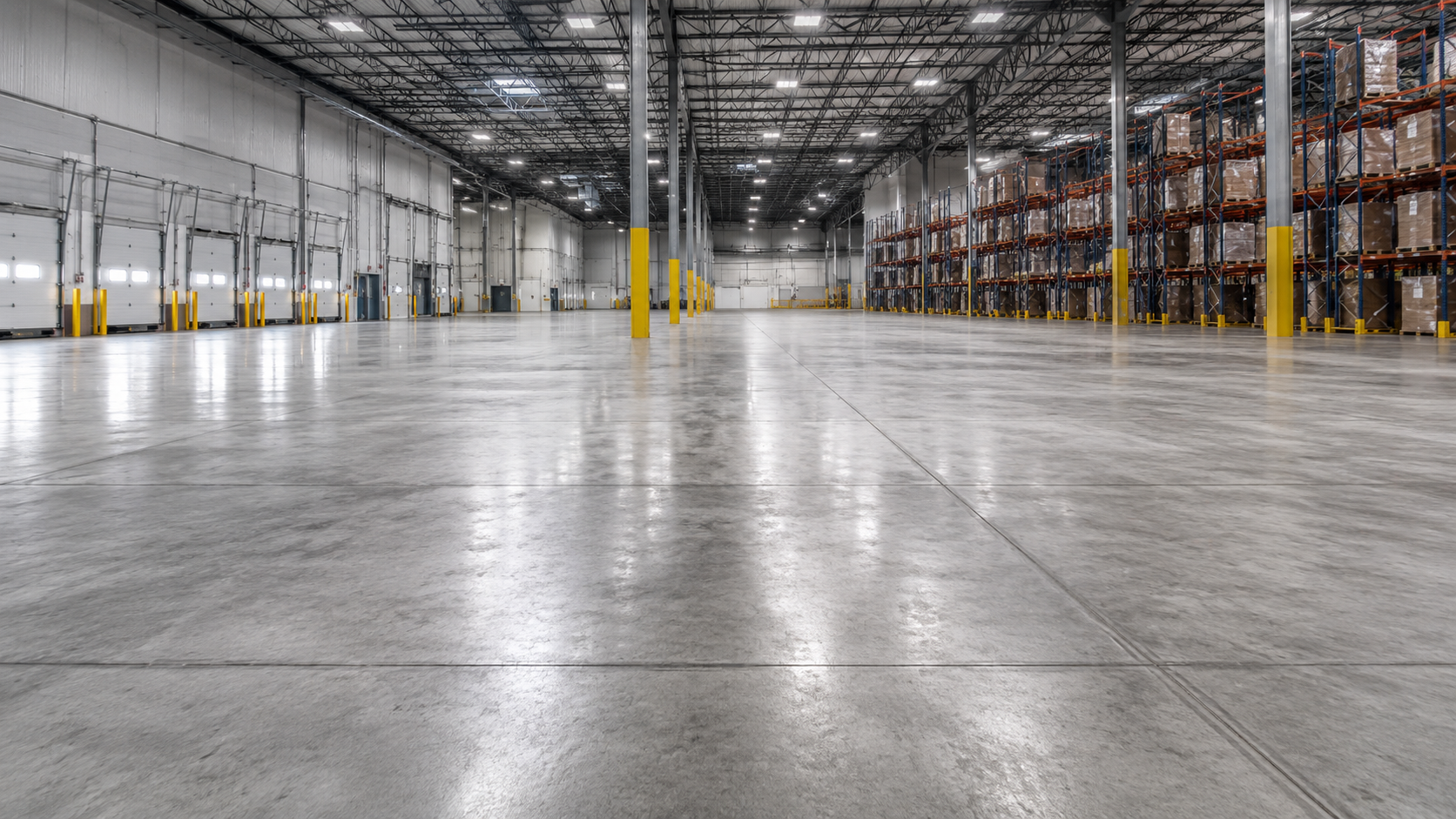
Warehouse & Industrial Floor Contractor in Raytown, MO
Concrete floor installation for warehouses, distribution facilities, and light industrial spaces in Raytown and the southeast Kansas City metro. We pour slabs to load specifications and flatness requirements for facilities where floor performance directly affects operations — from standard storage to forklift-intensive logistics.
The Result
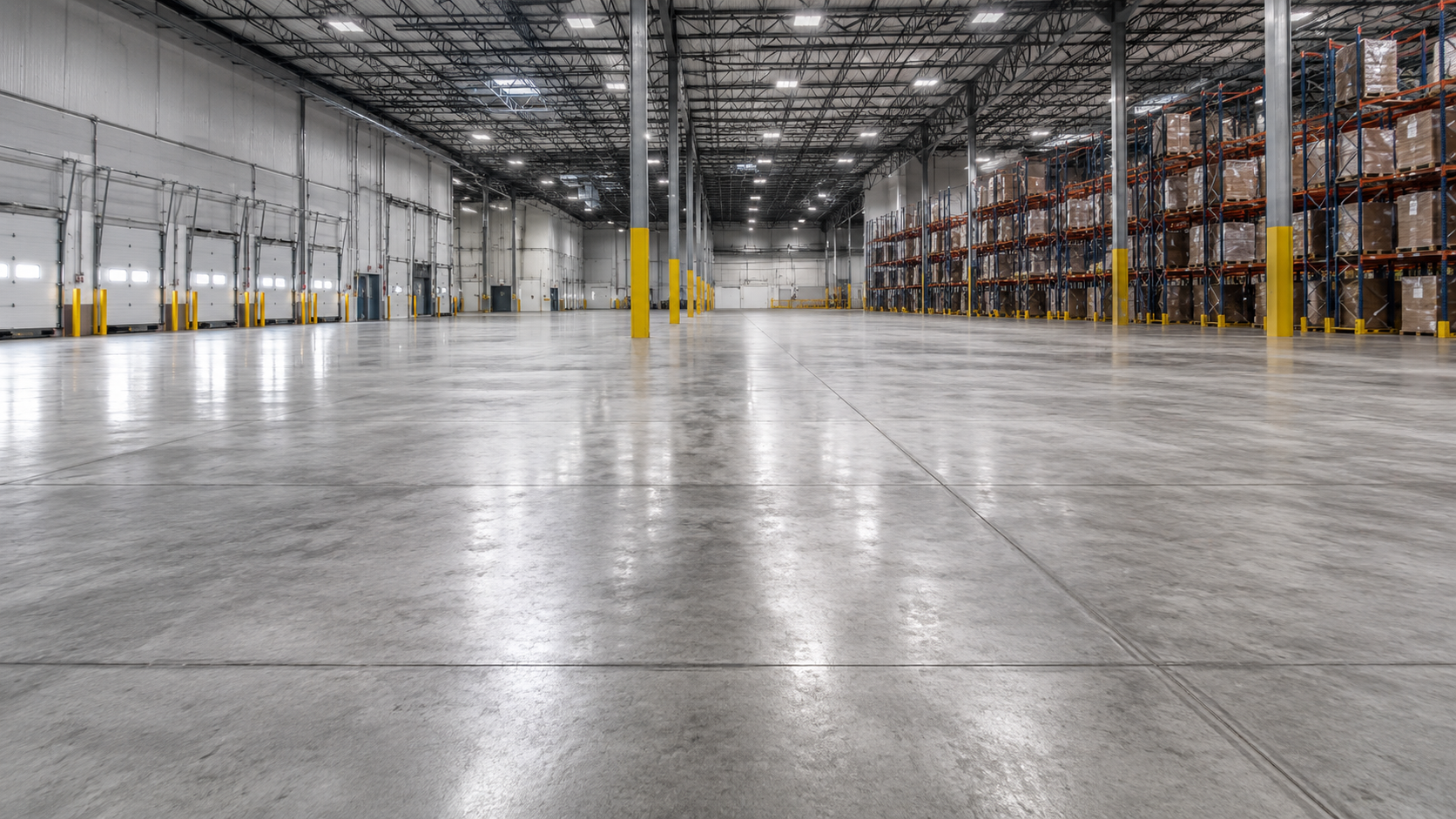
A Floor That Supports the Operation, Not Just the Building
Industrial concrete floors fail operations before they fail structurally. A floor with inadequate flatness creates forklift instability and rack alignment problems. Insufficient thickness causes fatigue cracking under concentrated rack loads. Getting the specs right at installation is far cheaper than resurfacing or replacing a floor that doesn't meet operational requirements two years later.
Overview
What Warehouse and Industrial Floor Work Covers
Projects include new floor pours for warehouse and distribution buildings, replacement of deteriorated or undersized existing floors, floor sections for dock areas and loading zones, and heavy industrial pours for manufacturing or processing facilities. We work with GCs during construction and with facility owners on replacement projects.
Common Reasons
New Warehouse Construction
Concrete floor pour for a new warehouse or distribution building — coordinated with the building shell and steel erection schedule.
Floor Replacement for Failing Slabs
Existing warehouse floors that have cracked, settled, or scaled to the point where they create operational issues or maintenance burden.
Facility Expansion
Adding floor area to an existing facility — new sections alongside existing concrete, coordinated for level transitions.
Dock and Loading Zone Pours
Heavy-use dock areas, drive-in ramps, and loading zones requiring thicker concrete and doweled joints for truck and forklift traffic.
Light Manufacturing Floors
Concrete floor pours for light manufacturing, assembly, or commercial kitchen facilities needing a durable, cleanable surface.
Technical Standards
What Matters on Warehouse & Industrial Floors Projects
Slab Thickness for Load Capacity
Standard storage: 5–6 inches. Forklift traffic: 6–7 inches. High rack loads with narrow-aisle equipment: 7–8+ inches, sometimes with engineered design. Getting this wrong means premature cracking.
Floor Flatness Specs (FF/FL Numbers)
Industrial floors are specified with FF (flatness) and FL (levelness) numbers. High-reach forklift operations need F-min numbers of 40–50+. We pour to the flatness specification required for the operation.
Joint Design and Saw-Cut Timing
Saw-cut control joints need to happen within 4–12 hours of pour, before shrinkage cracks form. Joint layout in warehouse floors is designed to minimize interference with rack configurations.
Sub-Base Compaction and Vapor Control
Industrial slabs require well-compacted sub-base and typically a vapor retarder to control moisture migration that affects operations and flooring systems above.
Surface Hardener for Wear Resistance
Dry-shake or liquid surface hardeners densify the concrete surface and increase wear resistance for forklift and pedestrian traffic — standard on warehouse floors.
Raytown & Southeast KC
Local Conditions That Affect This Work
Interior warehouse slabs are less affected by KC's freeze-thaw cycling than exterior concrete, but moisture from clay-rich soil below is a significant factor. Vapor retarder specifications and sub-slab drainage design matter for facilities in the KC metro, particularly those on sites with historically high water tables or heavy clay subsoil.
How It Works
From First Call to Final Walkthrough
Request Your Estimate
Call or submit the form. We'll schedule a site visit at your property — no phone quotes for work we haven't seen.
Site Review and Quote
We assess scope, site conditions, and measurements in person, then provide a written quote.
Prep, Form, and Pour
We handle demo if needed, subgrade preparation, forming, and the pour on an agreed schedule.
Finish and Walkthrough
We finish to spec, apply curing compound, and walk you through care and timeline before leaving the site.
Note for this service
We discuss your racking layout and equipment traffic patterns before designing joint placement. Joints that intersect with rack leg positions cause problems — coordinating layout early prevents that.
Common Questions
Warehouse & Industrial Floors FAQ
What thickness should a warehouse floor be?
What are FF and FL floor flatness numbers?
How do you handle joint layout for warehouses with racking?
How long before operations can begin after the pour?
Can you add a surface hardener to the floor?
More questions? Call us directly.
(816) 542-6124Related Services
Foundations & Sitework
Foundations, slabs, preparation, and sitework for residential additions and commercial scopes.
Learn moreParking Lots
Commercial parking lot concrete, exterior flatwork, access surfaces, and property frontage improvements.
Learn moreADA Concrete
ADA ramps, accessible entries, walkways, and commercial access concrete.
Learn moreCoverage
Warehouse & Industrial Floors Throughout the Southeast KC Metro
Raytown • Kansas City • Grandview • Independence • Lee's Summit • Blue Springs
Request a Free Site Walk for Warehouse & Industrial Floors
We serve Raytown and the southeast Kansas City metro. Call (816) 542-6124 or submit the form — we'll schedule a site visit and follow up with a written quote.